SAIREYAK

SAIREYAK -सैरेयक (कुष्ठघन)

Introduction-

 It is a shrub growing upto Im. It will have yellow flowers and found in many parts of India.
Caraka did not mention it under any of the 50 groups in his tex: but described it several times. Suśruta and Vägbhața have mentioned it under ganas. Bhāvamiśra quoted four variet- ies viz., Svēta, Pita, Rakta & Nila. Botanically they fall under three Barleria species viz.,

(1) B. prionitis- Yellow flowers

(ii) B. cristata Linn- White & red flowers

(iii) B. strigosa Linn- Blue flowers.


LATIN NAME - Barleria prionitis 

FAMILY NAME - Acanthaceae

ENGLISH NAME - Yellow nail-dye plant

 पर्याय- सहचर,झिण्टी,पियाबासा
 
Morphology - गुल्म( 1m)

Chem.const.- Barlerin,Acetyl Barlerin

रस- तिक्त,मधुर

गुण- लघु

वीर्य - उष्ण

विपाक- कटु

आमयिक प्रयोग - कुष्ठ,कण्डु,वातरक्त,विषहर,पालित्य-खालित्य

Titerapeutic Usage -

(1) Müşika Visa- Root of Saireyaka shall be given with honey and rice water (A.H.Ut. 38).

(2) Vātavyādhi-Oil prepared with the decoction of Sahacara, Devadāru and Sunthī is useful (A.H.Ci. 21).

Important Formulations- Sahacarādi taila, Krśādi ghita,

Major Chemical Constituents

(1) B. cristata- Barlacristone, cristabarlone, acetylbarlein, apigenin etc.

(2) B. prionitis- Barlerin, acetyl barlerin, scutellarein-7-neophesperidoside etc.

(3) B. strigosa- B-sitosterol

Useful part - पंचांग

Dose- Leaf juice (10-20ml)
            Powder(2-4gm)
            Decoction (50-100ml)


विशिष्ट योग
- सहचरादि तैल,रास्नादि क्वाथ


Research

(1) The alcoholic extract of the entire plant of B. cristata was found to have hypoglycaemic activity in albino rats (Dhar et al., 1968).

(2) The decoction of the leaves of B. prionitis in a dose of 2.5 ml/100 g, was found to have moderate diuretic activity in rats compared to urea as the standard drug (Gujral et al., 1955).

(3) The extract obtained from B. cristata var. dictrotoma showed CNS depressant activity in mice. It also produced hypothermia in mice (Bhakuni et al.,1969 )

Basonym of Drug

Saireyaka

Main Synonym

Amalatan, dasi, bhana, kurantaka, sahachar, mrudukantaka, kinkirataka, jhinti

Regional Name

Bengali : kantajati, janti
Gujarati : katasairiyo
Hindi : katsareya
Kannada : gorantige
Tamil : shemmuli
Telugu : mullu goranti
English : yellow nail-dye paint

Botanical Name

Barleria prionitis Linn

Family

Acanthaceae

Classification (Gana)

Bhavprakash nighantu : pushpa varga.

Raja nighantu : karaveeradi varga.

Dhanvantari nighantu : guduchyadi varga

External Morphology

Small shrub with small spikes

Useful Parts

Whole plant

Important Phytoconstituent

Potassium, rhamnosyl, acetyl barlerin, iridoids

Rasa Panchak

Rasa : tikta, madhura
Guna : laghu
Virya : ushna
Vipaka : katu

Action

Kaphavatahara

Therapeutic Indication

Sothahara (anti-inflammatory), shoolahara (analgesic ), kusthaghna, netrarogahara (treat skin diseases), palityahara (prevents premature hair graying)

Therapeutic Uses

1. Sandhivata - oil prepared with saireyaka is useful to treat inflammation and pain arthritis.
2. Arma - powder of saireyaka, lodhra, and haridra is sprinkled in the eye after surgery of pterygium.
3. Karnashoola - root paste is applied over the swelling of glandular nodes and boils.

Dose

Juice - 10-20 ml, Decoction - 40-80 ml

Formulations

Sahacharadi taila, saptasara Kashaya, rasnadi kwath

Adverse Effect

Not Known

Remedial Measure

Not required

Purification

Not required


KARPURA TULASI


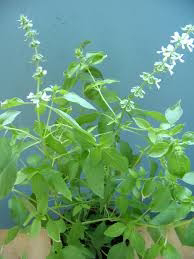
Tulsi is an aromatic, tropical perennial shrub native to India and Southeast Asia and it is an important symbol in the religious traditions of the Hindus.
Tulsi Kapoor is one of four main forms of Tulsi that are generally recognized and it is cultivated for religious and medicinal purposes and for its essential oil.
Tulsi Kapoor is an erect, much branched shrub 30-60 cm tall, with small, strongly scented, toothed green leaves.
It bears close whorls of purple/ pinkish flowers in elongate racemes.
In temperate regions Tulsi can be grown as an annual - it prefers full sun and will do well in pots or window boxes.


Name - Karpura tulasi
Latin name - Ocimum sanctum 

Family - Lamiaceae

Synonym 
            Gouri, Bahumanjari, Visnu vallava , surasa. 

Eng name - Indian basil / Holybasil 

Morphology
            Branched, aromatic under shrub 30-50 cm high, sometimes woody, hairy.
            Leaves-simple, opposite, ovate-oblong. - entire or subserrate. Petioles slender hairy
            Flowers- very small, pale white, borne in terminal and axillary racemes.
            Fruits-subglobose or broadly oblo  nutlets.
            Flowers and fruits almost throughout the year (mainly during September-February)

Chemical constituents - camphor, pinene, limonene, terpinolene, myrcene, beta-phellandrene, linalool,                                           camphene, p-cymene, borneol and alpha-selinene

Distribution & Habitat : Cultivated all over India

Rasa - Katu, Tikta 
Guna - Laghu , Ruksa 
Virya - Usna 
Vipaka - Katu

Karma - Kapha-Vatahara 

Indication - hikka , kasa, swasa ,visama jwara , cough , ulcer , anorexia , infections

Part use - Whole plant

Dose - Fresh juice : 10 - 20 ml 
            Powder : 2 - 4 g
            Decoction : 50 - 100 ml

Formulation - Surasadi kasaya , Nimabadi lepa 


Therapeutic Uses: Leaf juice useful in cough


Medicinal Uses. 

Apart from the religious significance, Tulsi Kapoor also has substantial medicinal meaning - it is used in Ayurvedic treatment and in Suriname's traditional medicine.
Studies support the use of Tulsi Kapoor for human and animal disease therapy and reinforce the importance of the ethno-botanical approach as a potential source of bioactive substances.
Tulsi Kapoor has adaptogenic, cardio protective, analgesic, immune enhancing, anti-fertility, anticancer, and anti-diabetic, antifungal, anti-allergic, antimicrobial, antibacterial and antispasmodic actions.
It will help in the treatment of bronchitis, malaria, diarrhea, dysentery, skin disease, arthritis, eye diseases and insect bites.
Tulsi Kapoor also contains vitamin C and A, calcium, zinc and iron, as well as chlorophyll and many other phytonutrients and enhances the efficient digestion, absorption and use of nutrients from food and other herbs.


LEMON TULASI

Lemon Tulsi 

Also known as Hoary Basil or Thai Lemon basil, this herb cultivated mostly in southern Asian and Northern Africa belongs to the mint family. The history of this herb finds its origin to ancient Greece, an essential part of their traditional therapeutic medical practices, and also a symbol of mourning.


LATIN NAME-Ocimum basilicum 
FAMILY-LAMIACEAE

SYNONYMS - Gouri, Nagamata, Bhutaghni, Bhutapriya, Bhuteshta, Bhutapati,

Eng. Name- Lemon basil, hoary basil

MORPHOLOGY- 
The herb is grown primarily in northeastern Africa and southern Asia for its fragrant lemon scent, and is used in cooking.

chem const.- geranial, neral, α-humulene, β-caryophyllene, β-caryophyllene oxide

Guna- Laghu, ruksha, teekshna

 Rasa- katu, Tikta, Amla 

Veerya- ushna 

Vipaka- katu 

Karma- kapha vata hara,  Pitta vardhak 

Useful part -leaf,oil fruit, seed, flower 

DOSE- Fresh juice - 10- 20 ml

Root decoction- 50-100ml 

Formulation - Tribhuvankirti rasa, Bilvadi gutika

Health Benefits of Lemon Basil

Protects Against Vision Loss

Lemon Basil is an excellent source of beta-carotene, a pigment found mostly in brightly coloured vegetables. The body converts beta-carotene into vitamin A, which aids in functioning of mucus membranes and is essential for a good vision.

Beneficial In Wound Healing

Lemon Basil is a great source of Vitamin K. This Vitamin assists the body in faster wound healing. The herb also provides considerable magnesium, iron, manganese, copper, calcium, and Vitamin C to the body.

Anti-inflammatory Benefits

Lemon Basil contains Citral and Limonene that has well known anti-inflammatory benefits. Those are particularly effective at protecting against breast and colon cancers as citral limits the growth of breast cancer cells.

Controls Cortisol Levels

Lemon Basil keeps the cortisol, the stress hormone levels in check. The elevated levels of this hormone can cause multiple health conditions such as diabetes, reduced immune function, obesity, and even memory problems.


Bharangi


Bharangi


FAMILY- Verbaenaceae

LATIN NAME-Clerodendrum serratum पर्याय-ब्राह्मणष्ठिका, खरशाक, पद्मा

Eng. Name -Blue-flowered Glory Tree

MORPH -क्षुप 8 फीट

Synonyms in the Sanskrit language

Brahmanayastika – its stem is very thin
Kharashaka- its leaves are very dry
Padma- the flower of this plant resembles that of lotus
Other synonyms are- Bhargi, Phanji, Hanjika

Chemical constituents

Scutellarein, uncinatone, Hispidulin, pectolinaigenin, 7-0 glucuronides, etc

गुण- लघु, रूक्ष

रस - तिक्त, कटु

वीर्य- उष्ण

विपाक- कटु

आमयिक प्रयोग -गुल्म, रक्तदोष, शोथ, कास,श्वास, पीनस, ज्वर, अग्निमांद्यहर

प्रयोज्यांग- मूल

DOSE-3-6Gm

विशिष्ट योग - भारंग्यादि क्वाथ


Therapeutic uses of Bharangi

Skin health
Bharangi shows effective results in clearing skin because of its antioxidant property. Juice of Bharangi leaves can be used as a local application to get relief from skin-related issues like boils, burns, itchy skin, redness, etc. Regular use of Bharangi for skin proves helpful.

Respiratory issues
Bharangi works as a natural mucolytic agent that breaks down the mucus and expelled it out from the lungs. This herb also shows good results in patients who are suffering from asthma, tuberculosis, rhinitis, etc.

Herpes infection
Because of the anti-inflammatory property, bharangi helps to reduce inflammation which is the main symptom of herpes infection. The analgesic effect of bharangi also reduces pain around cold sores.

Headache and fever
Roots of bharangi can be used in the form of paste for local application overhead and it will provide relief from mild to intense headaches. Due to antibiotic action, it also lowers the body temperature and can be used mainly in case of hyperpyrexia or malaria fever.

Wound healing
The Antiseptic and anti-inflammatory property of bharangi helps to kill or stop the growth of microbes over the skin and also treats inflammation naturally. The paste of its leaves is applied on the affected part because of this it works as a wound healer that heals non-healing wounds quickly.

Joint pain and lymphadenopathy
Various joint-related disorders can cause immense pain and discomfort in the joints. It can also restrict the ability of a person to move joints. As bharangi works as a natural analgesic and anti-inflammatory so it helps to reduce pain as well as inflammation and improves the movement of joints. It also provides relief in lymphadenopathy by reducing swelling of the lymph nodes.

Worm infestation
 A decoction prepared with the leaves of bharangi helps to kill warms and get rid of their infestation, particularly intestinal worms.

Part used- Leaves and Root

Dosage of Bharangi- 3 to 6 grams (powder)


Side effects of Bharangi-


There are no side effects known.

Shatavari

 Shatavari

Shatavari is a popular supplement that people use to treat a wide range of symptoms. It can be taken orally as a tablet, a powder, or liquid essence.

Recent studies suggest that the root could provide a number of health benefits. However, more studies are needed before this herb can be recommended to treat any specific condition, and it is not currently used in clinical medicine.


"Improving the health of the female reproductive system."

Perhaps the most common traditional use of shatavari, or A. racemosus, is to treat female health conditions, specifically reproductive disorders.

"Reducing symptoms of menopause" 

In line with its traditional use as a treatment for female reproductive conditions, recent research suggests that a combination of herbal medicines, including A. racemosus, may reduce the symptoms of menopause.


Latin name -Asparagus racemosus

Family - Liliaceae

Synonyms - shatamuli,bahusuta,atirasa

English name- Asparagus root

Morph- climber

Chem comp-sarsapogenin,sitosterol

Guna-guru,snigdha
Rasa-madhura,tikta
Virya-sita
Vipaka-madhura

Amaika prayoga- raktapitta,amlapitta,vataroga

Part used-kandabatmula

Dose-3-6gm(churna)

Important formulation-shatavarighrita,narayanataila


Antioxidant effects

Antioxidants protect the body from free radicals that damage cells and cause diseases like cancer. They also combat oxidative stress.


Anti-anxiety effects

Shatavari supplements have traditionally been used to alleviate anxiety and depression, although no studies have investigated these effects in humans. However, studies suggest that the plant may have these effects in rats. 


REACHERS

  • Promoting diuretic activity. A 2010Trusted Source study on rats found that shatavari had a diuretic effect without causing acute side effects.
  • Lowering blood sugar. Results of a study from 2007 suggest that shatavari may help to maintain blood sugar levels. Some researchers believe that the herb may benefit people with type 2 diabetes.
  • Relieving coughs. A study from 2000 showed that shatavari root extract was effective in relieving coughs in mice. It worked as well as codeine phosphate, a prescription cough medicine. Shatavari root juice is widely used in parts of India as a cough remedy.
  • Treating diarrhea. A study on rats from 2005Trusted Source showed that shatavari helped to combat diarrhea.
  • Improving gastric ulcers. A 2005Trusted Source study indicated that shatavari treated medically-induced ulcers in rats’ food pipes and stomachs. The authors concluded that the herb was about as effective as the medication ranitidine, which is often used to treat ulcers in humans. However, they noted that shatavari was not as effective at treating stress-induced ulcers.


Apamarga

APAMARGA 


FAMILY AMARANTHACEAE
LATIN NAME - Achyranthes aspera
SYNONYMChirchitaa, Shikhari, Shaikharika, Adahshalya, Mayura, Mayuraka, Kharamanjari,                           Kharapushpaa, Pratyakpushpaa, Aaghaat, Vashira, Kanihi
ENGLISH NAMEPRICKLY CHALFF FLOWER

MORPHOLOGY A stiff erect herb, 30-90 cm high. Branches spreading.
                 Leaves - dimple, opposite, velvety- tomentose, 3.8-12.5 cm x 5.1-7.6 cm.
                 Flowers - bisexual, greenish-white, arranged in long spikes, inverted (Hence Apamarga).
                                 Flowering in winter and fruiting in summer.

HABITAT AND DISTRIBUTION - All over India

CHEMICAL COMPOSITION - POTASS

GUNAलघु, रूक्ष, तीक्ष्ण
RASAकटु तिक्त
VIPAKकटु
VIRYAउष्ण
KARMA - Astringent, diuretic, hepatoprotective, emmenagogue

INDICATIONS : Chardi, Hridroga, Adhmāna, Kandü, sula, Udara, Apaci, Raktaras, Visücikā, Krimi,                                  Sidhma, Sadyo vrana, Mutrakrcchra , Anaemia, piles, fistula, menorrhagia

PARTS USEDwhole plant

DOSE :
        POWDER : 1-2 g
        LEAF JUICE : 10-15 ml
        DECOCTION : 50-100 ml


FORMULATIONS - Apamarga ksara taila , Sikhari ghruta

Kusha

KUSHA


LATIN NAME- Desmostachya bipinnata


Eng.Name- Halfa grass

Synonyms-yagyabhusana,suchyagra

Morph- 2-3 feet (khyupa)

Guna- laghu, snigdha


Virya -sita

Vipaka- Madhura

Amayika prayoga- mutrakrcchra,Asmari,visarpa

Part used- Root

Dose- 50 -100 ml

Formulation - Kusadi ghrta,Kusadi lepa


Basonym of Drug

Kusha

Main Synonym

Darbha, barhi, suchyagra, yagyabhushana

Regional Name

Gujarati : kusha
Hindi : kusha
Telugu : darbha gaddi
Malayalam : kusha

Botanical Name

Desmostachya bipinnata

Family

Gramineae

Classification (Gana)

Aacharya Charaka : stnyajanana, mutravirechaniya mahakashaya and madhura skandha

Aacharya Sushruta : Trina panchmoola

Bhavprakash nighantu : guduchyadi varga

External Morphology

1/2 to 1-meter high perineal grass

Useful Parts

Root

Important Phytoconstituent

Cylindrine, arundroine, isobarilone

Rasa Panchak

Rasa : madhura, kashaya
Guna : laghu, snigdha
Virya : shita
Vipaka : madhura

Action

Tridoshahara

Therapeutic Indication

Mutrala (diuretic), stanyajanana (galactagogue), ashmarighna (lithotriptic), trishnahara (reduces excessive thirst)

Therapeutic Uses

1. Pradara - root powder with bala churna and rice water is helpful to treat leucorrhea.
2. Ashmari - root powder with water is useful as a diuretic in renal calculi.
3. Stanyakshaya - root powder with ikshu swarasa is useful as a galactagogue.

Dose

Decoction - 50-100 ml, root powder - 3-6 gm

Formulations

Trinapanchmoola kwatha, kushadi ghrita, kushavaleha

Adverse Effect

Not Known

Remedial Measure

Not required

Purification

Not required


Internal uses :


As it is haemostatic, it is used in diarrhoea and dysentery with bleeding per rectum. menorrhagia and other bleeding disorders. It is a galactogoque. It has diuretic and lithotripsic properties. hence it is used in dysuria and calculi. Its decoction is helpful in skin disorders.

Jayanti

Jayanti 

Sesbania sesban clears throat, useful in treating cervical lymphadenopathy and Vata imbalance disorders. On external application, seed paste has anti inflammatory properties and controls oil secretion.
Habitat (Utpattisthāna): Throughout the tropicals, mostly in South India. Probably introduced from Africa.

Habit (Swarūpa): A small soft-wooded tree of rapid growth, reaching 4.5 m. height, Leaves 7.5-15 cm. long paripinnate. Leaflets 9-14 pairs, opposite 1.8-2.5 cm. by 3.8-6 cm. Flowers 1.2-1.5 cm. long, yellow, few flowered, axillary racemes. Pod 15-23 cm. long by 2.5-3.8 mm. seeds 20-30.

Botanical name- Sesbania aegyptiaca, Sesbania sesban Family-Fabaceae 
 local name(Simbi Kula, Aparajita Upakula)

Sanskrit Synonyms-Sookshma moola root is very thin Jayanti, Vijaya, Jaya, Harita, Bala mota, Aparajita, Vikranta

Chemical constituents

Major Chemical Constituents: Glucose, Fructose, Sucrose,

Erythritol, Arabinitol, Galactitol and Myo- inositol are identified in bark & stem extract.

Leaf and pod - ampesterol, cholesterol and beta-sitosterol

Triterpenoids, proteins, tannins, Saponins glycosides and steroids. Flowers cyanidin and delphinidin -

glucosides.

Pollen and pollen tubes contain alpha- ketoglutaric, oxaloacetic and pyruvic acids. 

Properties, part used, dosage

Sesbania sesban medicinal properties:

Guna (qualities) - Laghu - light to digest, Rooksha - Dryness

Rasa (taste) - Katu - pungent, Tikta - bitter- bitter

Vipaka- Katu - Undergoes pungent taste conversion after digestion Veerya Ushna - Hot potency Effect on Tridosha - Balances Kapha and Pitta.

Part used- Root, Bark, flower, Seed Dosage- Decoction 50-100 ml Churna - powder 2-6 grams, in divided doses per day.

Uses, indications

Sesbania sesban uses:

Laghu light to digest

Kantha Vishodhini cleanses throat

Vatahara useful in treating disorders of Vata Dosha imbalance such as neuralgia, paralysis, constipation,

bloating, etc

Rasayana - anti aging, causes cell and tissue rejuvenation

Indicated in:

Mutrakrichra -Dysuria, urinary retention Visha Toxic conditions, poisoning

Galaganda Cervical

lymphadenopathy disorders

Bhutapaha - useful in psychiatric

On external application: seed paste has anti inflammatory properties and controls oil secretion.

Its ointment is used in treating itching and hives.

External application is useful in treating eczema and psoriasis.

Seed paste is applied on scorpion bite to relieve pain and inflammation.

Leaf paste is applied on hair, before bath, to improve hair growth.

Digestive system: It is useful in improving digestion strength and in intestinal worm infestation

(Antihelmintic).

Blood and circulation - It is an excellent blood detoxifier. Useful against Pitta disorders.

Respiratory system: Clears throat of

sputum

priyala

Priyala

Botanical name- Buchanania latifolia

Family -Ancardaceae

Morphology - tree grows upto 40- 50 ft

Synonyms-khara skandha,Dhanuspata, Bahula valkala,Tapasesta,Sannakadru,cara

Major chemical constituents-kaempferol

Rasa - madhura
Virya -sita
Guna -snigdha,guru
Vipaka - madhura
Karma - vata - pittahara,hrdya,vrsya

Indications- vataroga ,udarda,daha,sirahsula

Part used-stem bark ,seed kernel 

How to use chironji

It can be consumed raw or roasted and used as an ingredient in cooking / dishes. For weight loss, Charoli is dry roasted. 5 grams of this is taken with 1 - 2 teaspoons of honey, once or twice a day.

Dosage- bark decoction -50-100ml
Seed kernel -10-20g


Imp preparation -Priyala taila

प्रियालतैलं मधुरं गुरु श्लेष्माभिवर्धनम्। हितमिच्छन्ति नात्यौष्ण्यात्संयोगे वातपित्तयोः || २९१|| Ch. Su 27/291

Health Benefits Of Chironji:

Bark - Balances Pitta and Kapha Dosha,

Asraghna - useful in blood disorders such as abscess, skin disorders, bleeding disorders such as menorrhagia, nasal bleeding etc.

"Charoli seeds or seed kernels are used for various purposes."

Madhura sweet

Vrushya

aphrodisiac, improves vigor

Balances Vata and Pitta Dosha

Hrudya acts as cardiac tonic, congenial for heart

Atidurjara difficult to digest

Snigdha - unctuous, oily

Vishtambhi- may cause constipation

May cause Ama - A product of indigestion and altered metabolism

Chironji oil

Dr Amritha


Chironji oil - Priyala Taila

Madhura sweet

Madhura Vipaka - Undergoes sweet taste conversion during digestion process

Guru heavy to digest

Increases Kapha Dosha

Keshya Improves hair strength, promotes hair growth

Sheetala coolant

Balances Vata and Pitta

Abhishyandi sticks to the inner channels

Srushta mutra acts as diuretic

Agnisada may cause indigestion

Chironji oil is applied on hair to relieve gray hairs.

Chironji is used in making a dish called Shashkuli (Called Chakkuli in Kannada), along with other ingredients like black gram, ash gourd pulp etc reference: Kaiyadeva Nighantu, Krutaanna Varga

Sinduri


Basonym Of Drug

Botanical Name:-Bixa orellana Linn

English Name-Sinduri

Main Synonym-:Raktabija, raktapushpa, sukomala, virapushpa, trenapushpi

Family--Bixaceae

Morphology-:3-4 feet high shrub

Useful Parts-Whole plant

Rasa Panchak
Rasa : tikta, katu, kashaya
Guna : ruksha
Virya : ushna
Vipaka : katu

Action-Kaphavatahara

Therapeutic Indication

Vishahara (anti-poisonous), chardinigrahana (anti-emetic), trishnanigrahana (reduce excessive thirst), Varnya (good for skin)

Therapeutic Uses

1. Jwara - root bark decoction is given with pippali powder in fever.
2. Kamla - hot infusion is beneficial to treat jaundice.
3. Chardi - a pinch of seed powder with lime juice is given in vomiting.

Dose

Bark powder - 3-6 gm, seed powder - 1-2 gm

Formulations-Sinduri taila


Properties of Sindhuri

• Seeds and roots are considered as good appetiser (rochaka), absorbent (grahi) and relieves fever (antipyretic).

• Fruit pulp in small quantity is considered as grahi (absorbent) and in large quantity act as purgative (sramsana).

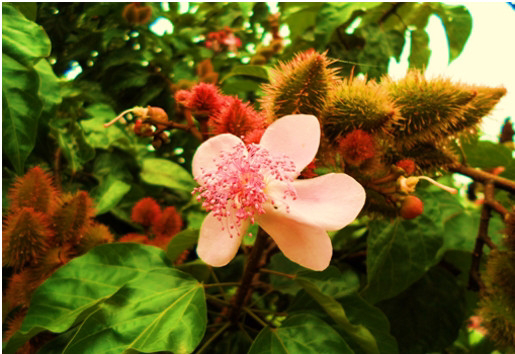
A natural orange-red condiment obtained from the waxy arils that cover its seeds is called annatto, achiote or bijol. Annato and its extracts are often used to impart a yellow or orange colour to foods such as cheese, butter, ice creams etc. it also adds flavor and aroma. In America it is used to make body paints and lipstick. Hence the plant is also called Lipstick tree.

Morpholgy of Bixa orellana (Achiote tree)

Bixa orellana is a perennial shrub grows to a height of 5 - 8 meter. Leaves are alternate, large 10 - 20 cm long, chordate, green. It bears clusters of white or pink flowers, appear at the tip of the branches. Fruits are globular, bright red or green, covered with soft spines, arranged in clusters. Seeds are small,30 - 45 in number, cone shaped, covered with red pigment.

Distribution

Bixa orellana is a native to tropical Central and South America. In India it is distributed in Karnataka, Andhra Pradesh, Tamil Nadu, Orissa, West Bengal, Gujarat, Maharashtra, Madhya Pradesh and Chhattisgarh.

Side Effects of Bixa orellana

There are no recorded side effects of this plant.

However taken in excess dose can cause gastric irritation and constipation due to astringent property.

Externally in some can cause allergic reactions.


Rasna

Name - Rasna

Latin name -Alpinia Officinarum 

Family - Zingiberaceae 

English name- Lesser galangal

Synonyms - Elaparni, yukta, sugandha 

Classical categorization:-

Charak-Anubasana Upayoga Bayasthapana 
Susrut-Arkadi
Bhava Prakash-Haritakadi


Morphology- Herb growing upto 5-6 ft Bearing red colour inflorescence 

Habitat-All over india most in north india.

 Chemical componenets - Galangin , Kaempferide , diaryl-heptanoids

Rasa Panchaka 
Guna-guru
Rasa- Tikta
Virya-usna
Vipaka-katu

Karma- kapha - vatahara

Uses of Rasna (Alpinia Galanga)
1gm of rasna powder, saunth, gond and afeem is used to treat diarrhoea and abdominal tumours.

Rasna powder, ghodvach and mulethi are used to treat various kapha dosha in the body

It is used to eliminate impurities and blood from uterus after delivery.

The paste of 10cm long rhizome is used to induce vomiting in cases of indigestion. 1-2gm of leaf powder is also used to induce vomiting to

excrete out Kapha dosha in the body.

It is used as rasayana and blood purifier to remove impurities from the blood

Rasna is also used to cure gout, joint pain, body aches and used as an antidote for snake poisoning.

Rhizome paste is applied externally to reduce stiffness and pain in cases of gout.


Health Benefits of Rasna (Alpinia Galanga)

Vamak It is very effective emetic in nature, maximum 3gm of powder of this herb is used to induce vomiting to eliminate dosha from the body.

Kapha nisarak-It also helps to pacify Kapha dosha in the body. It help to excrete extra phlegm and congestion from the respiratory tract and it is used to reduce inflammation of the respiratory tract.

Swedal-It helps to open the blocked sweat pores in the body and help to stimulate the process of sweating

Rakta shodhak Alpinia is also a very effective herb to fight against impurities of blood. It helps in the process of purification of blood.

Anulomik-It also helps to pacify aggravated vata dosha in body. It is beneficial for treating various types of vata disorders. It helps to treat bloating, flatus and distention of abdomen.

Aampachak-It helps to neutralize the harmful effects of extra accumulated hydrochloric acid in the gut. It helps to stimulate digestion and also help to treat sore mouth and blenching.


Part used- Rhizome, leaves

Dose- decoction 

Important formulation - Rasnairandadi kasayam
Maha rasanadi kasayam,Rasanasaptaka Kasaya,Rasanadi Tailam

Research :-
(1) Anti-fungal and antibacterial activity of a flavonoid from rhizomes is reported 
(In. ISxp. Biol. 1976, 14, 712).

(2) Diaryl-heptanoids exhibited prostaglandin biosynthesis inhibiting activity
 (Chem. pharm.Bull. 1982, 30, 2279).


SAIREYAK

SAIREYAK -सैरेयक (कुष्ठघन) Introduction -  It is a shrub growing upto Im. It will have yellow flowers and found in many parts of...